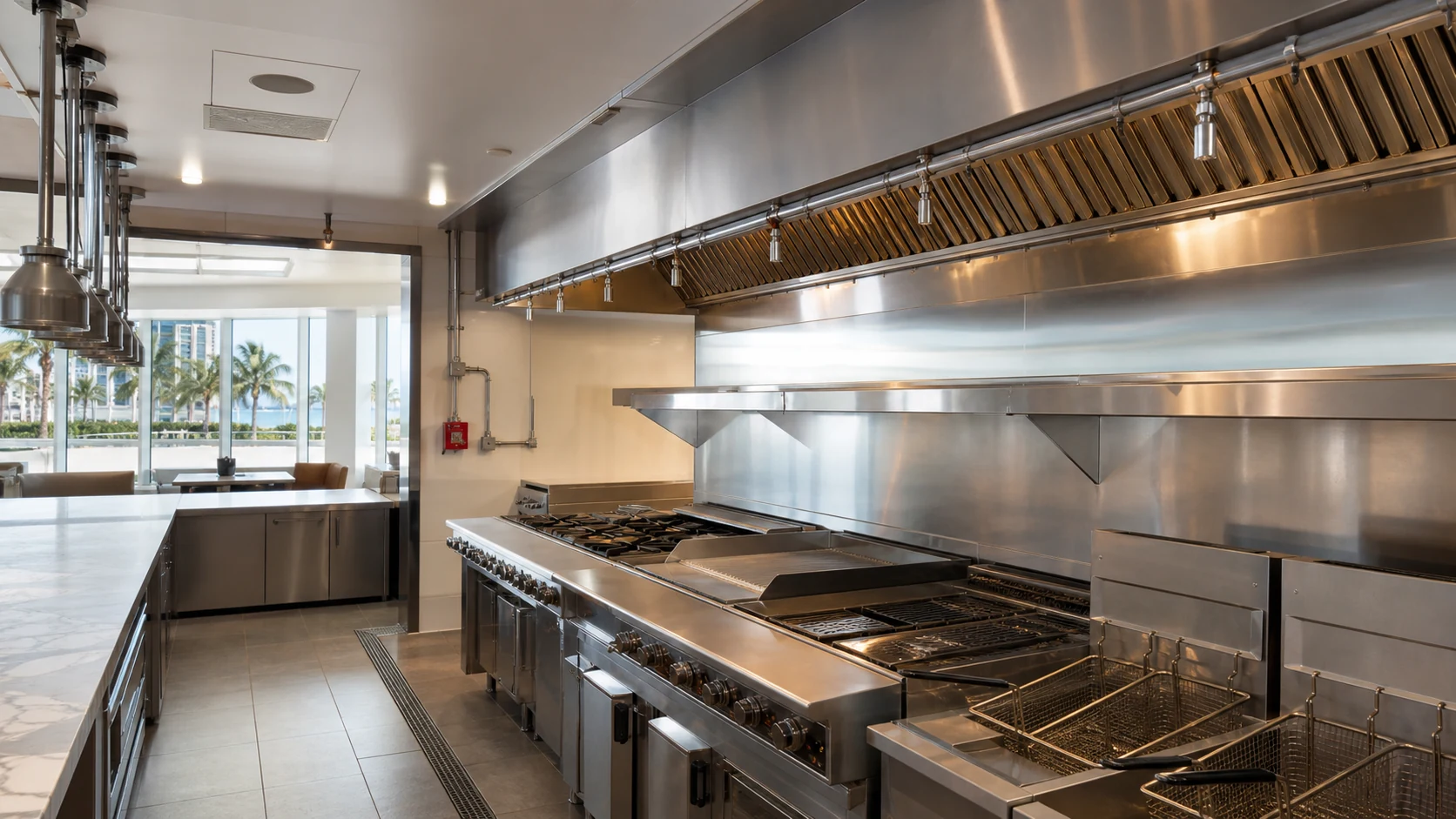
Cafeteria and Corporate Dining Fire Protection
Kitchen Hood Fire Suppression Palm Beach provides inspection and related service for Palm Beach County cafeterias and workplace dining operations using protected commercial cooking equipment. Coordinate system records, operating windows, building access, and known concerns through one request.
Recurring Fire Suppression Service for Palm Beach County Workplace Kitchens
Palm Beach County facility contacts should provide the current service date and identify whether the kitchen operates daily, seasonally, or only for scheduled events. A cafeteria within an office, warehouse, industrial property, or institutional campus may require building-specific parking, loading, security, and escort arrangements.
The inspection concerns fixed fire-extinguishing equipment protecting the cooking line. It does not include sanitation review, hood cleaning, appliance repair, or general building maintenance.
If the cafeteria has more than one cooking area, identify each fire suppression system and tag independently. Clear system identification helps facility teams coordinate records and service planning for each protected cooking line.
Provide prior reports, deficiency notices, and appliance-change details when relevant. These details help frame the request around the installed commercial kitchen fire suppression system and known conditions.
Facility contacts can also identify the responsible on-site person, required building access procedures, and the operating window when the cooking line is available for service.
Need to coordinate a cafeteria kitchen service visit around building procedures and operating hours?
Request ServiceCoordinate Cafeteria Fire Protection Service Across Palm Beach County
Palm Beach County multi-building campuses should provide the exact kitchen location and a responsible contact familiar with both the cooking operation and property procedures. Include prior reports, deficiency notices, and appliance-change details when relevant.
Exact Kitchen Location
Identify the building, cafeteria, workplace dining room, or other exact kitchen location so service can be coordinated with the correct property procedures.
Responsible Contact
Provide a contact familiar with the cooking operation, building access, security, parking, loading, and any escort arrangements.
Operating Window
Share the kitchen's operating pattern and the available service window. A workplace kitchen may operate daily, seasonally, or only for scheduled events.
System Records
Keep records for each protected cooking area available. Where more than one cooking area is present, identify each fire suppression system and tag independently.
A Seasonal Workplace Kitchen May Still Need Recurring Service
A seasonal or lightly used kitchen should not be assumed exempt from recurring service. Confirm the appropriate schedule for the installed fire suppression system and applicable requirements rather than relying only on how often the kitchen operates.
Daily Operations
For a kitchen operating daily, share the service date and the available operating window for the protected cooking line.
Seasonal Operations
For a seasonal kitchen, confirm the installed system's applicable recurring service schedule rather than assuming the kitchen is exempt.
Scheduled Events
For a kitchen used only for scheduled events, provide event timing and building-access details when requesting cafeteria fire protection service.
Installed System
The appropriate schedule must be confirmed for the installed fire suppression system and applicable requirements.
Recurring service concerns fixed fire-extinguishing equipment protecting the cooking line.
Not sure what information to provide? Start with the current service date, kitchen location, operating pattern, and any known system concerns.
Recurring Inspection ServiceWhat to Provide When Requesting Cafeteria Fire Protection Service
A well-prepared request helps workplace dining teams coordinate commercial kitchen hood fire suppression service around the actual kitchen, its protected cooking equipment, and the property procedures that apply to the visit.
Current Service Date
Provide the current service date and available system records so the request includes the existing service history.
Known Concerns
Include prior reports, deficiency notices, and any known fire suppression system condition that needs attention.
Appliance Changes
If cooking equipment has been replaced or rearranged, request an appliance-change evaluation and provide details about the previous and current cooking arrangement.
Building Procedures
Identify parking, loading, security, building access, and escort requirements that may affect a service visit at an office, warehouse, industrial property, or institutional campus.
Plan Service Around the Workplace Kitchen Schedule
Workplace dining operations can have different service windows depending on whether the kitchen operates daily, seasonally, or only for scheduled events. Share the available operating window when requesting service.
The responsible contact should be familiar with both the cooking operation and property procedures. This helps coordinate access to the protected cooking line without treating the kitchen fire protection system as general facility maintenance.
For kitchens located within a larger campus or multi-building property, provide the exact kitchen location along with parking, loading, security, and escort information.
If the cafeteria serves more than one cooking area, identify each fire suppression system independently. Each protected area may have its own system and tag records.
Routine inspection planning is easier when the current service date, operating pattern, system records, and known concerns are shared before the visit is coordinated.
Commercial Kitchen Fire Protection Services for Workplace Dining
Kitchen Hood Fire Suppression Palm Beach provides inspection and related service for protected commercial cooking equipment in Palm Beach County cafeterias and corporate dining operations.
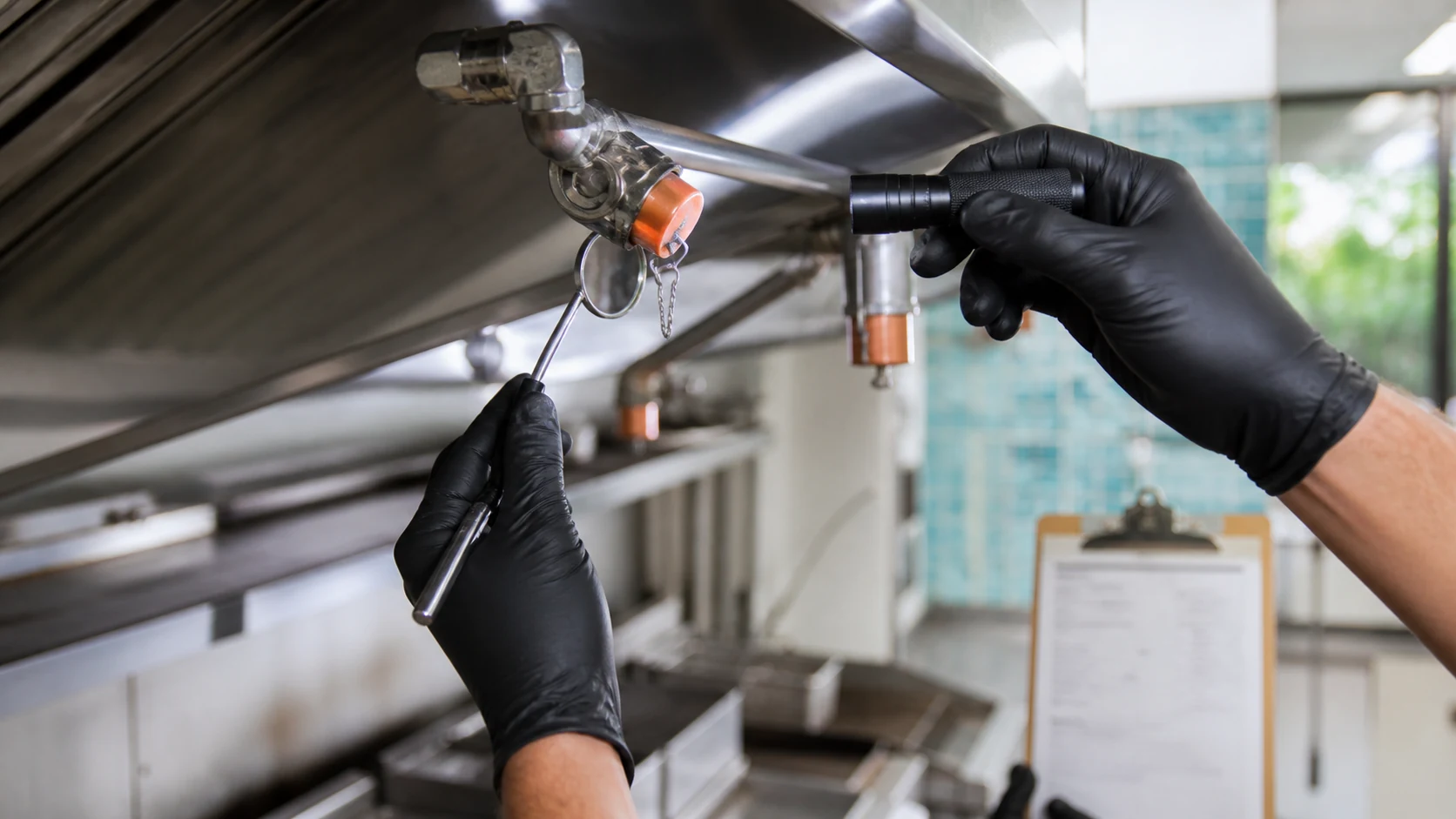
Fire Suppression Inspection
Coordinate inspection service for the fixed fire-extinguishing equipment protecting the cafeteria cooking line.
View service →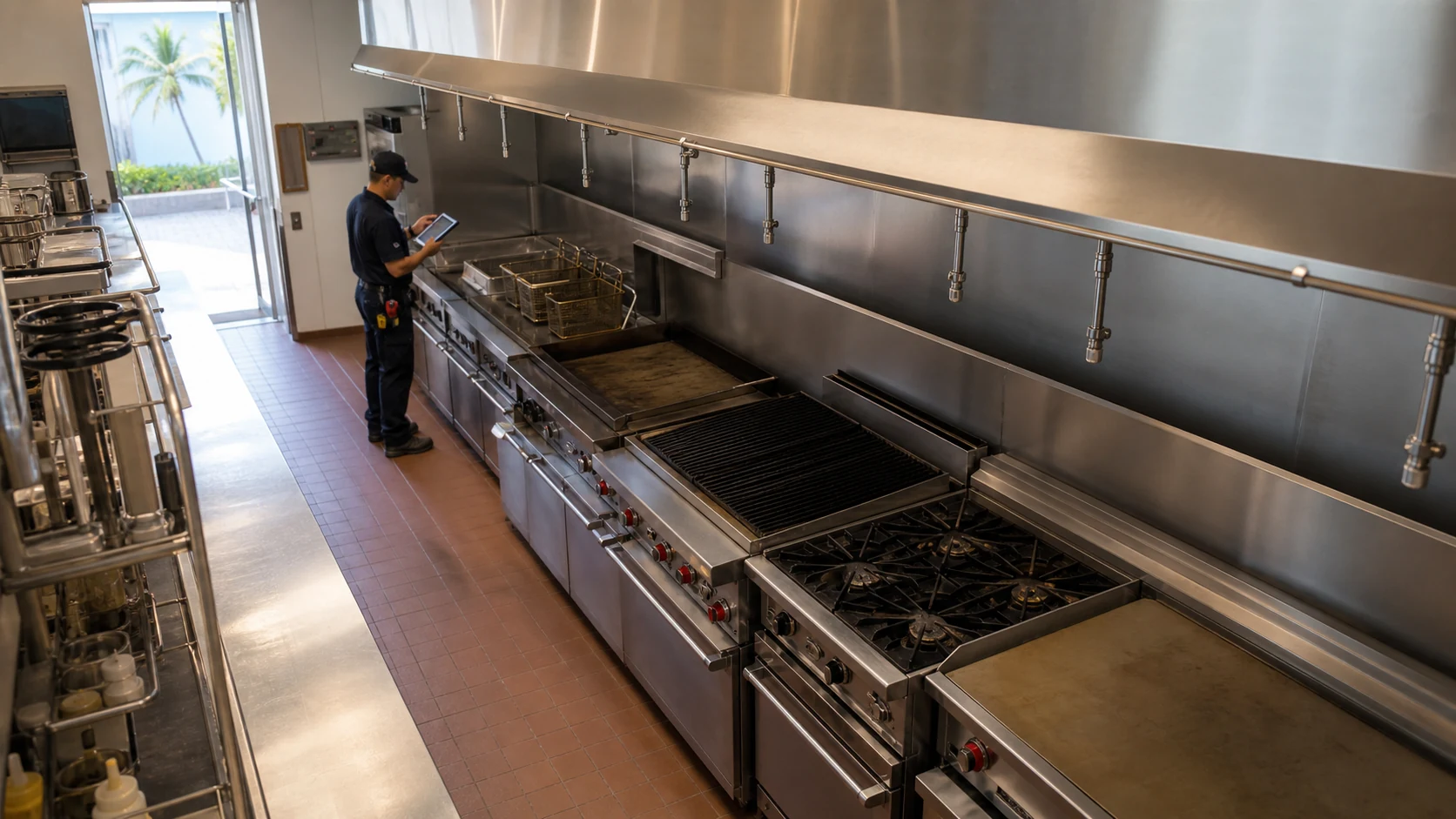
Repair and Deficiency Correction
Provide prior reports or deficiency notices when repair and deficiency correction needs attention.
View service →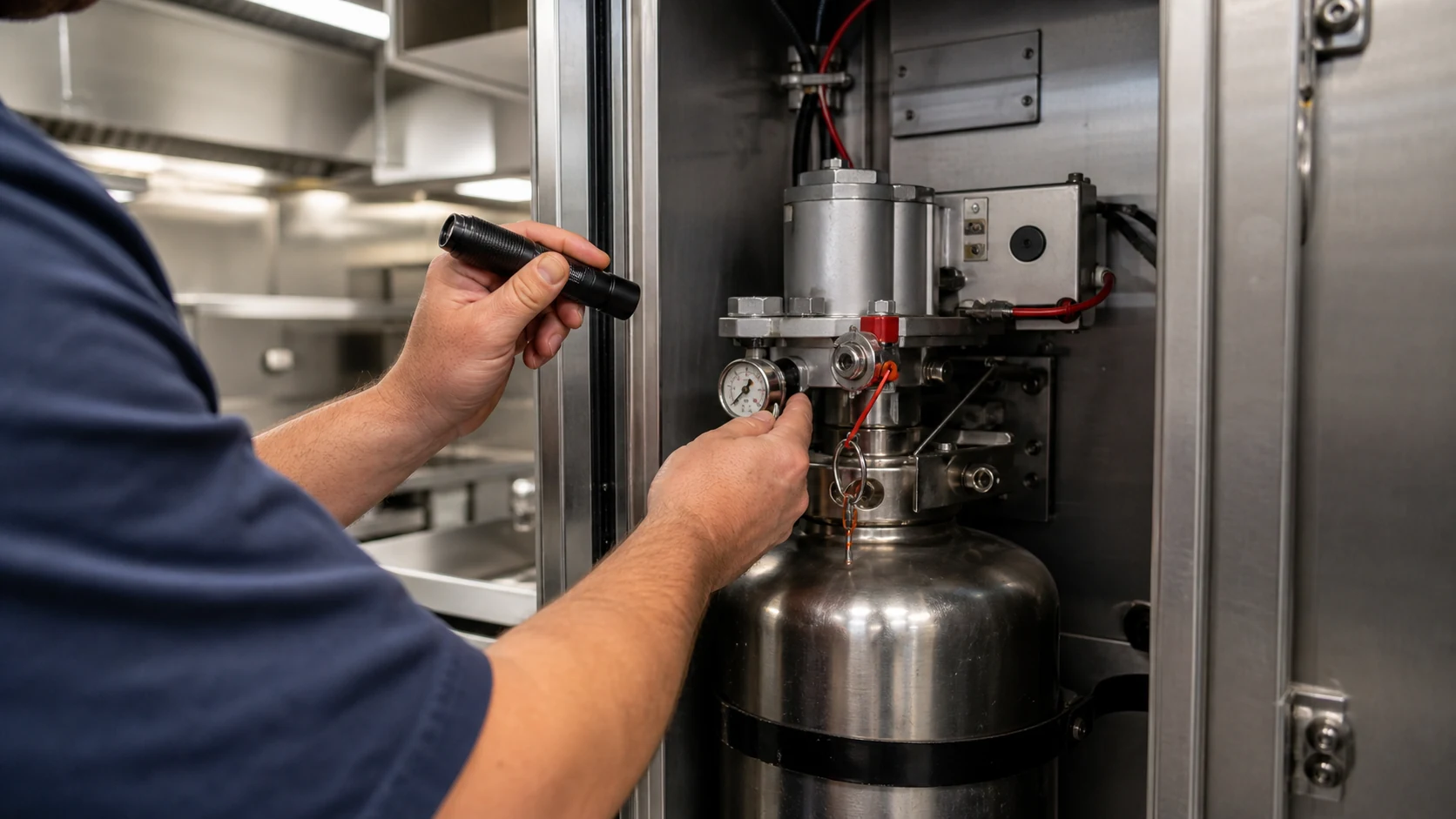
Recharge and Reset
Request recharge and reset service when the installed kitchen fire suppression system condition requires attention.
View service →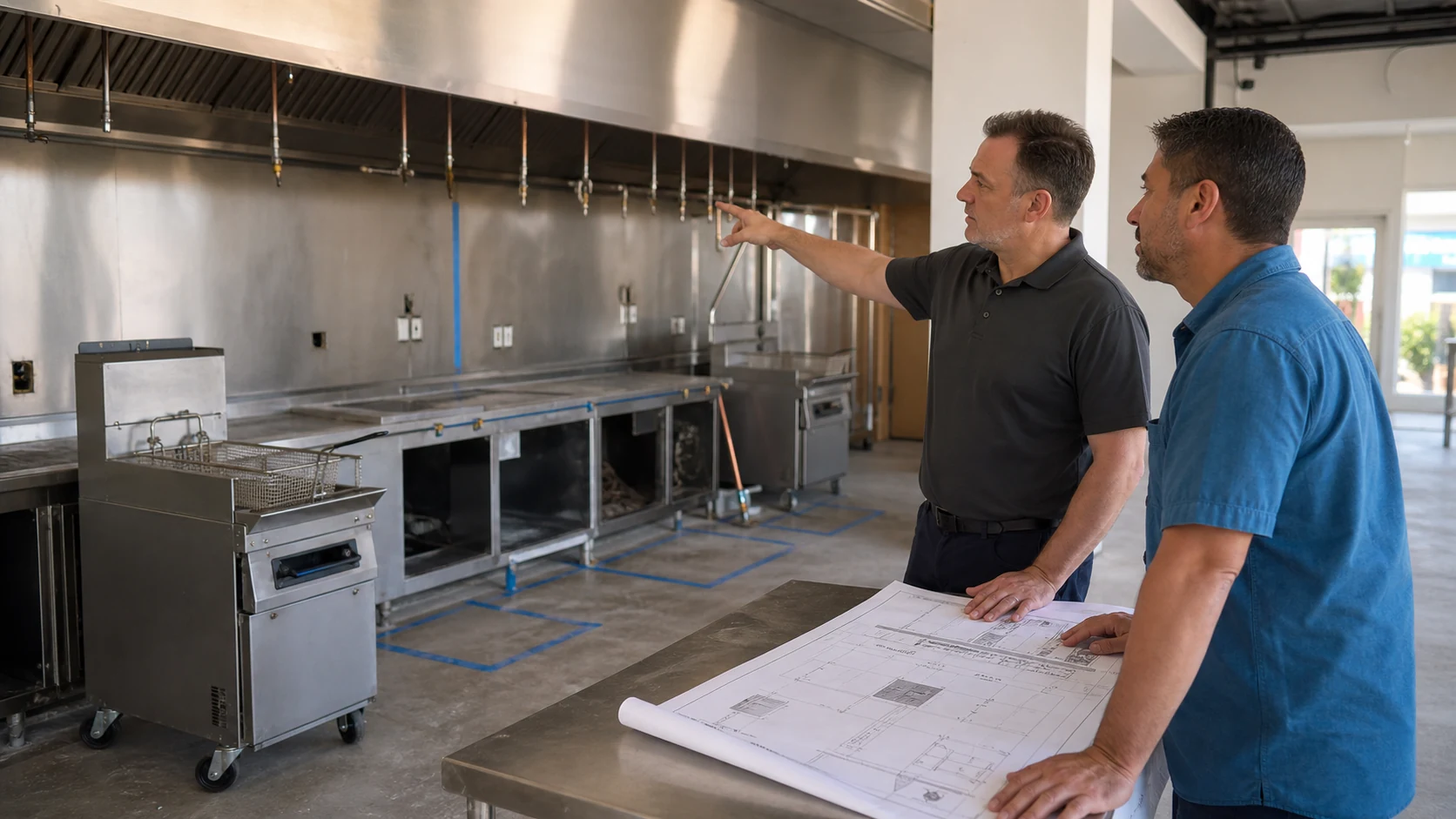
Modification
When cooking equipment changes, provide the previous and current arrangement for a fire suppression modification evaluation.
View service →
Installation and Replacement
Coordinate an installation or replacement evaluation for protected commercial cooking equipment in a workplace kitchen.
View service →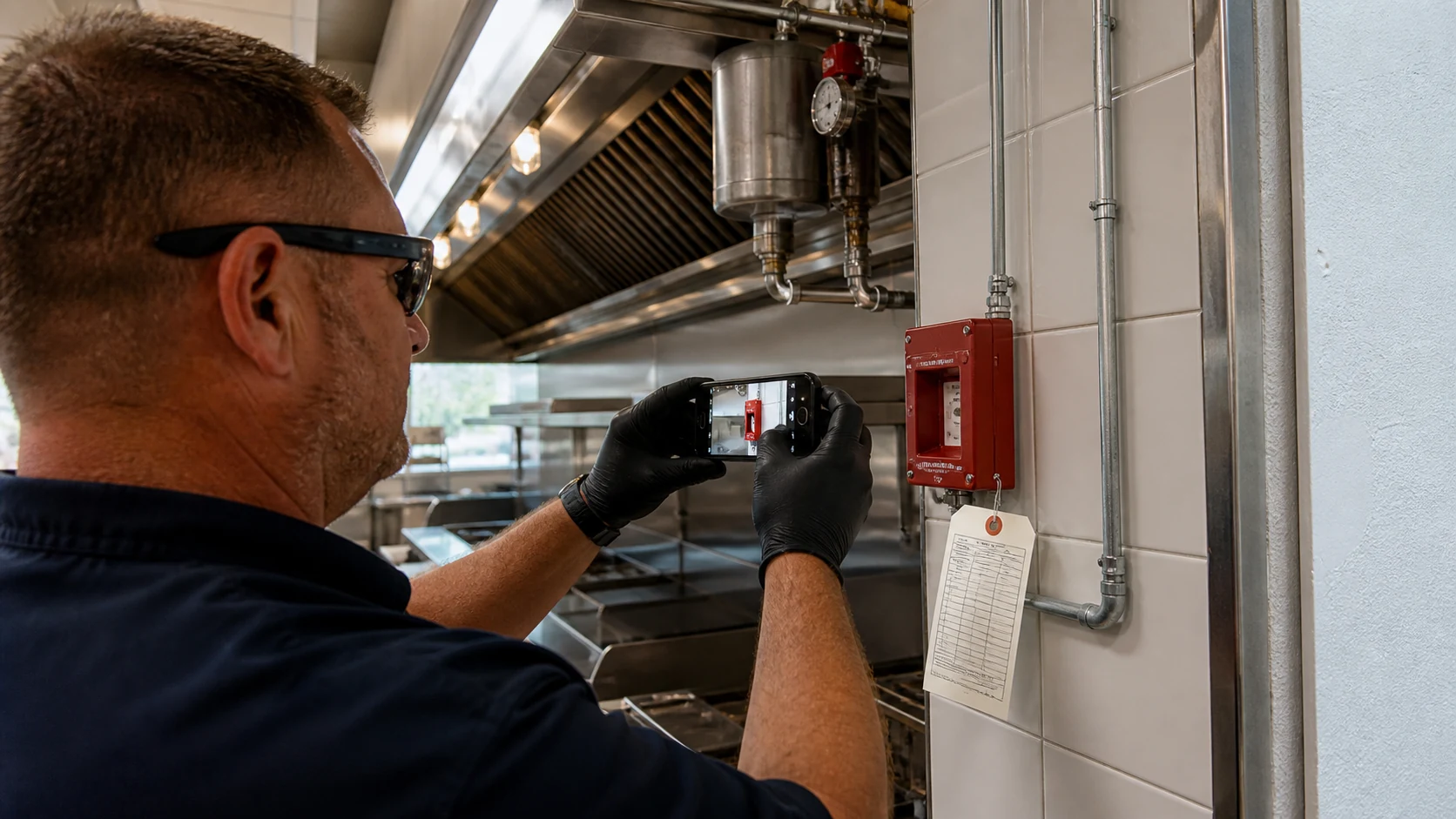
Reports and Tag Follow-Up
Use system records, reports, and tag information to coordinate follow-up for the cafeteria fire suppression system.
View service →Cafeteria Fire Protection FAQs
Kitchen Hood Fire Suppression Palm Beach provides inspection and related service for Palm Beach County cafeterias and workplace dining operations using protected commercial cooking equipment.
Schedule Cafeteria Fire Protection Service
Provide the current service date, exact kitchen location, operating window, responsible contact, and any known system concerns. Kitchen Hood Fire Suppression Palm Beach coordinates service for Palm Beach County workplace dining operations.