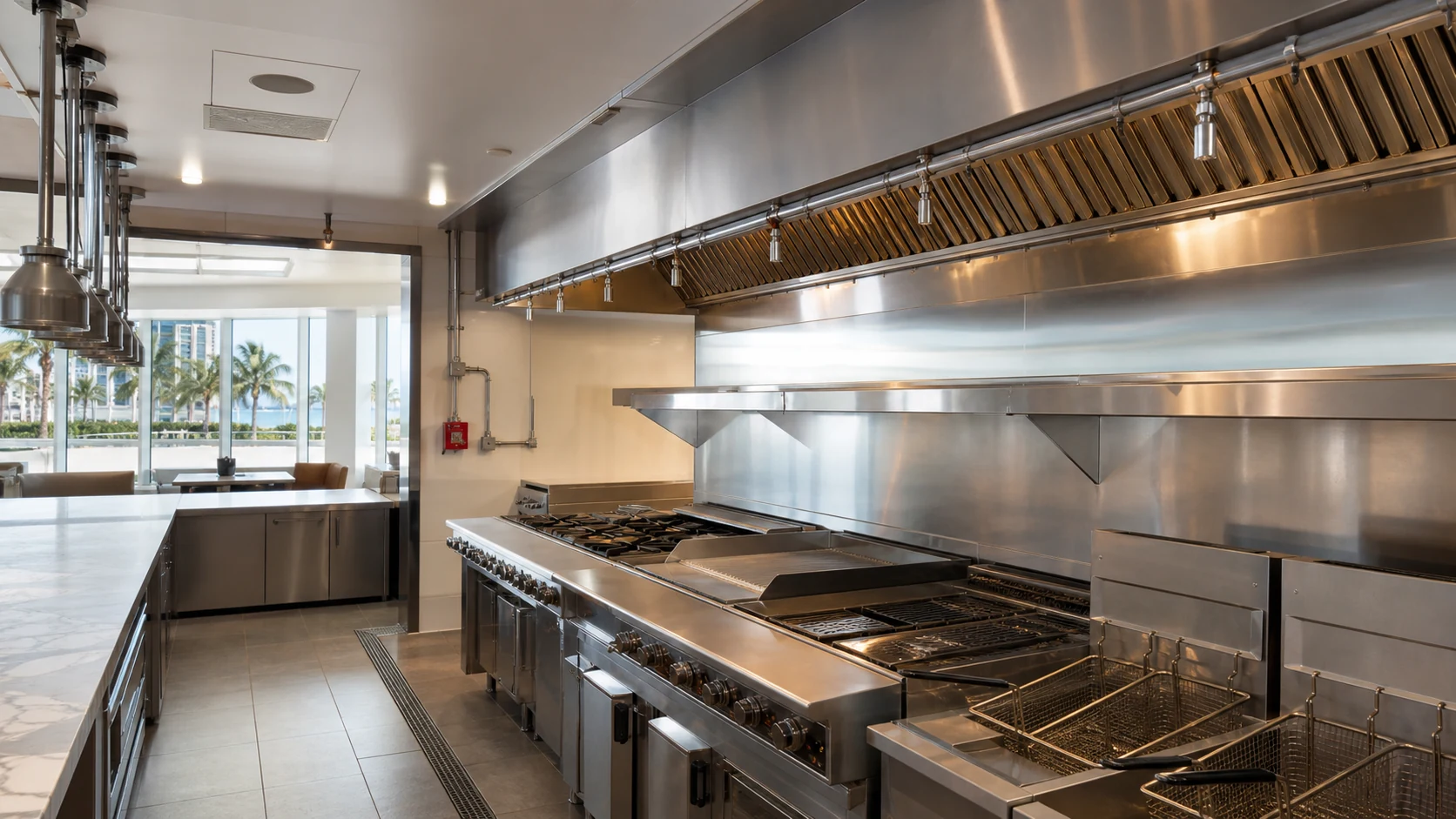
Kitchen Fire Suppression Projects for Managed Properties
Kitchen Hood Fire Suppression Palm Beach accepts Palm Beach County service requests from property managers, building owners, general contractors, and kitchen-equipment contractors coordinating commercial food-service spaces. Clear responsibility, project documents, fire suppression system records, site contacts, and appliance information help distinguish recurring service from tenant turnover, deficiency correction, or renovation work.
Palm Beach County Tenant-Space, Renovation, and Turnover Coordination
Palm Beach County property contacts should provide existing inspection reports, lease-related requests, tag information, and the planned use of the cooking space. An inherited fire suppression system should not be assumed current or suitable for a new tenant’s appliances solely because the previous restaurant used it.
Property and tenant contacts should agree on who will authorize service, provide access, receive documentation, and coordinate follow-up. Clear contacts and complete records help keep commercial kitchen hood fire suppression work organized through a turnover or project.
Submit original deficiency findings rather than paraphrased summaries. The original report, tag information, existing system records, appliance details, and site contacts give the project discussion a clearer starting point.
Recurring inspection, corrective repair, and modification evaluation are separate service paths. Tenant turnover often requires more than updating a contact name when the cooking operation changes.
A change in the planned cooking arrangement can affect the fire suppression system discussion. Existing records and appliance information should be reviewed before the property team treats a prior setup as a match for the next tenant.
Planning a tenant turnover or changed cooking operation? Start with the property records, appliance information, and current fire suppression system documentation.
Discuss Your ProjectPalm Beach County Renovation and Contractor Coordination
Palm Beach County contractors should submit project schedules, plans when available, hood details, appliance information, and existing fire suppression system records early in the project. Early coordination gives the project team time to identify the information needed for a kitchen fire suppression evaluation.
Project Documentation
Include available plans, hood details, proposed appliance information, existing inspection reports, tag information, and the site contact responsible for access and project coordination.
Construction Coordination
Fire protection work may need coordination with appliance placement, gas, electrical, ventilation, ceilings, or other construction activity. Discuss the planned cooking use and project timing early.
Separate Service Paths
Recurring inspection, corrective repair, modification evaluation, installation, and replacement are different service paths. The appropriate path depends on the existing system, the planned cooking arrangement, and the project documentation available.
Confirmation Before Assumption
Installation, engineering, permitting, plan review, and manufacturer-specific capabilities are confirmed rather than assumed. No project approval outcome is guaranteed.
Keep Project Contacts and System Records Clear
Managed properties can involve building owners, property managers, tenant contacts, general contractors, kitchen-equipment contractors, and service contacts. Before work is requested, identify who will authorize service, provide access, receive documentation, and coordinate any follow-up.
Authorization
Identify the person or party authorized to request and approve commercial kitchen hood fire suppression service for the property or tenant space.
Site Access
Provide the site contact and access details needed to coordinate a visit at the commercial food-service space.
Documentation
Identify who should receive inspection reports, deficiency findings, tag information, and other available fire suppression system records.
Follow-Up
Clarify who will coordinate follow-up when recurring service, corrective repair, or modification evaluation is needed.
Original inspection reports and deficiency findings provide more useful project information than paraphrased summaries.
Not sure whether the property needs recurring service, corrective repair, or a modification evaluation? Start with the existing records and planned cooking arrangement.
About Inspection ServiceWhen a New Tenant Changes the Cooking Space
Tenant turnover can change more than the contact information for a commercial food-service space. The proposed cooking use, appliance information, hood details, existing fire suppression system records, and current service status should all be part of the project conversation.
Existing System Records
Provide available inspection reports, tag information, deficiency findings, and other fire suppression system records. These documents help establish what is known about the inherited system.
Planned Cooking Use
Share the planned use of the cooking space and appliance information. A prior tenant’s system should not be assumed suitable solely because it served the previous restaurant.
Property and Tenant Roles
Property and tenant contacts should agree on service authorization, site access, documentation recipients, and the person responsible for follow-up coordination.
Deficiency Follow-Up
Submit original deficiency findings so the project team can discuss the documented condition rather than rely on a paraphrased summary.
Property managers and contractors can also review contractor project-intake guidance when coordinating commercial kitchen hood fire suppression work in Palm Beach County.
Coordinate Before Kitchen Decisions Are Finalized
Palm Beach County contractors should request fire protection coordination before appliance, hood, and construction decisions are finalized whenever possible. Project schedules, available plans, hood details, appliance information, and existing system records are useful early inputs.
Fire protection work may need coordination with appliance placement, gas, electrical, ventilation, ceilings, or other construction activity. The property team and contractors should discuss the proposed cooking use alongside the available project documentation.
For a tenant space or renovation, the existing fire suppression system should be evaluated in relation to the planned cooking arrangement rather than assumed suitable because the former operation used the space.
Installation, engineering, permitting, plan review, and manufacturer-specific capabilities are confirmed rather than assumed. Project approval outcomes are not guaranteed.
For installation and replacement evaluations, provide the planned cooking use, appliance information, hood details, and existing fire suppression system records when available.
Commercial Kitchen Hood Fire Suppression Services for Projects
Managed-property and contractor projects may involve recurring service, maintenance, repair and deficiency correction, recharge and reset, modification, installation, or replacement evaluation. The appropriate service path depends on the project information and existing system condition.

Inspection
Recurring inspection service for commercial kitchen hood fire suppression systems, supported by available system records and site contacts.
View service →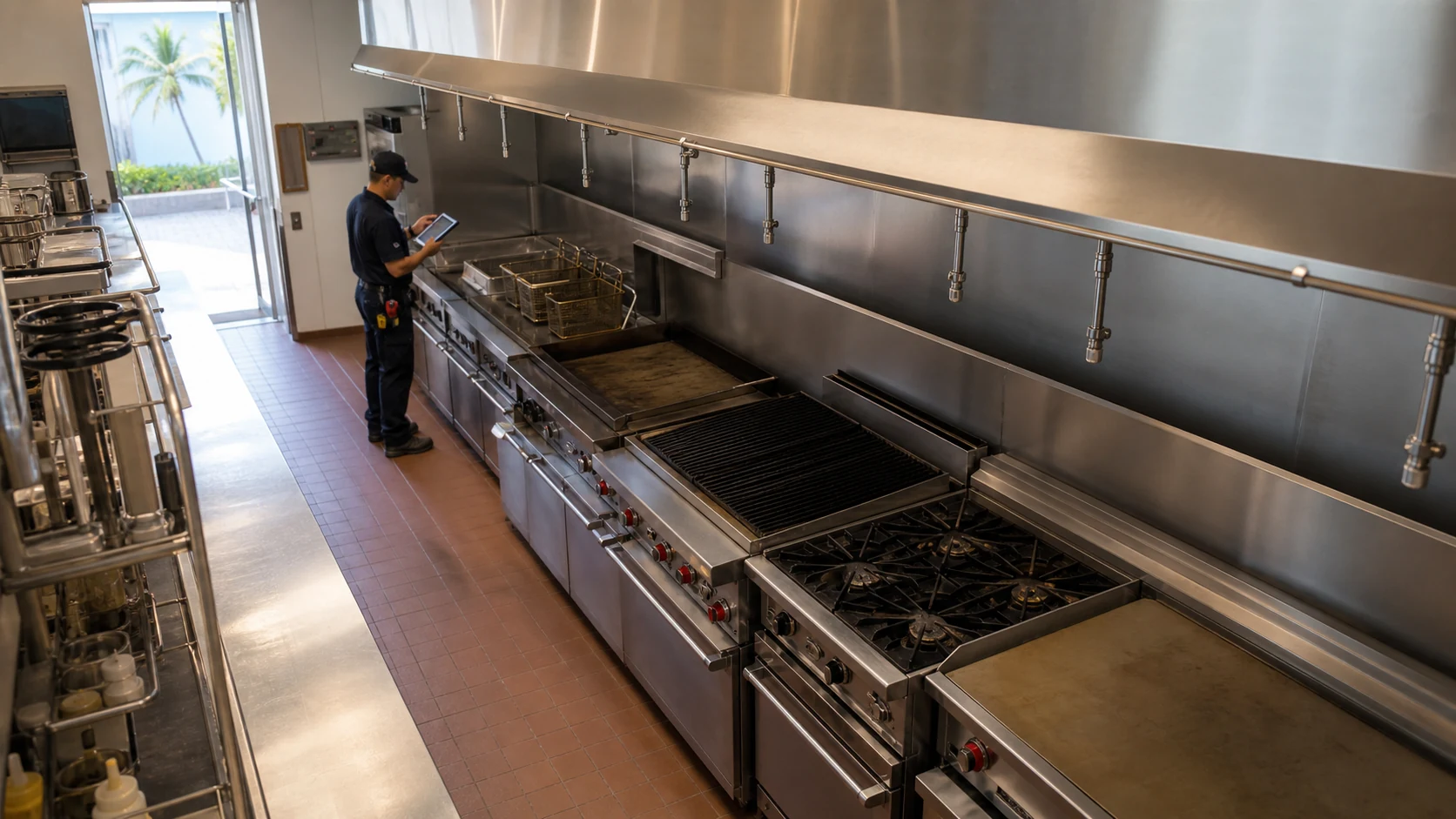
Repair and Deficiency Correction
Corrective repair and deficiency follow-up begin with original findings, system records, and clear responsibility for authorization and coordination.
View service →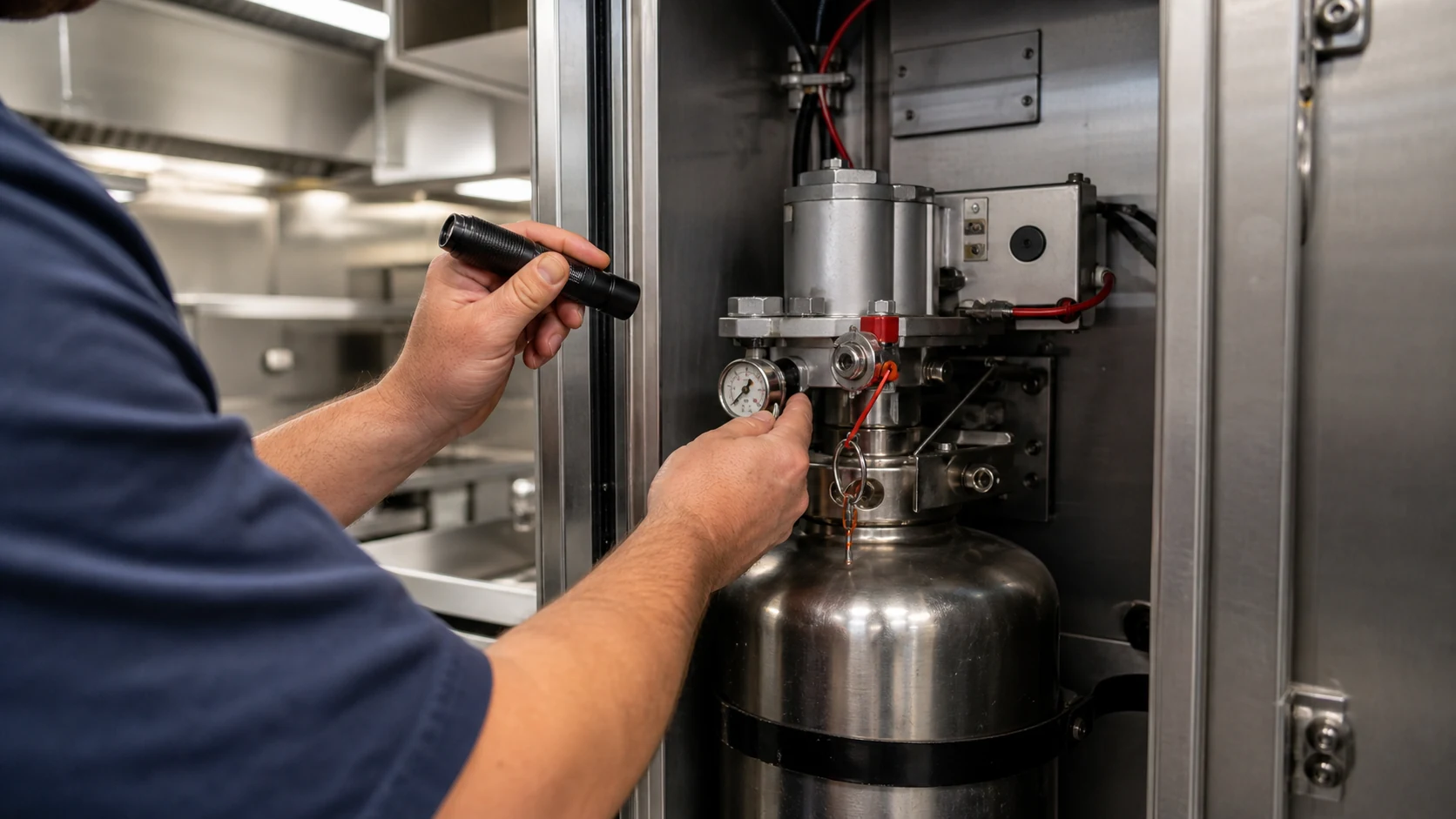
Recharge and Reset
Recharge and reset service is a separate path from recurring inspection or renovation coordination and should be discussed with available system information.
View service →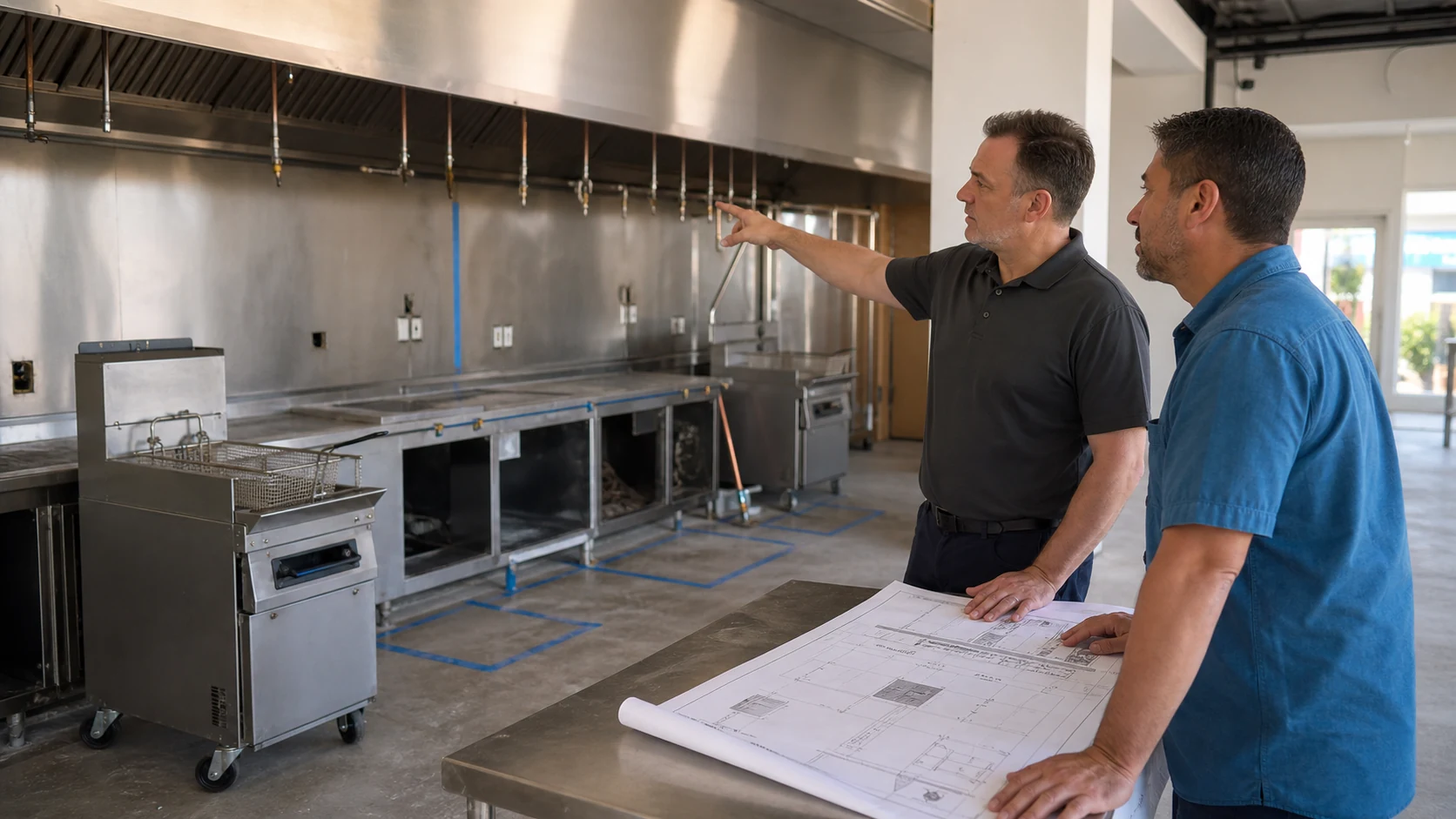
Installation and Replacement
Installation and replacement evaluations consider the planned cooking use, appliance information, hood details, and available existing fire suppression system records.
View service →
Modification
A changed cooking operation or appliance arrangement may require a modification evaluation instead of treating the existing system as automatically suitable.
View service →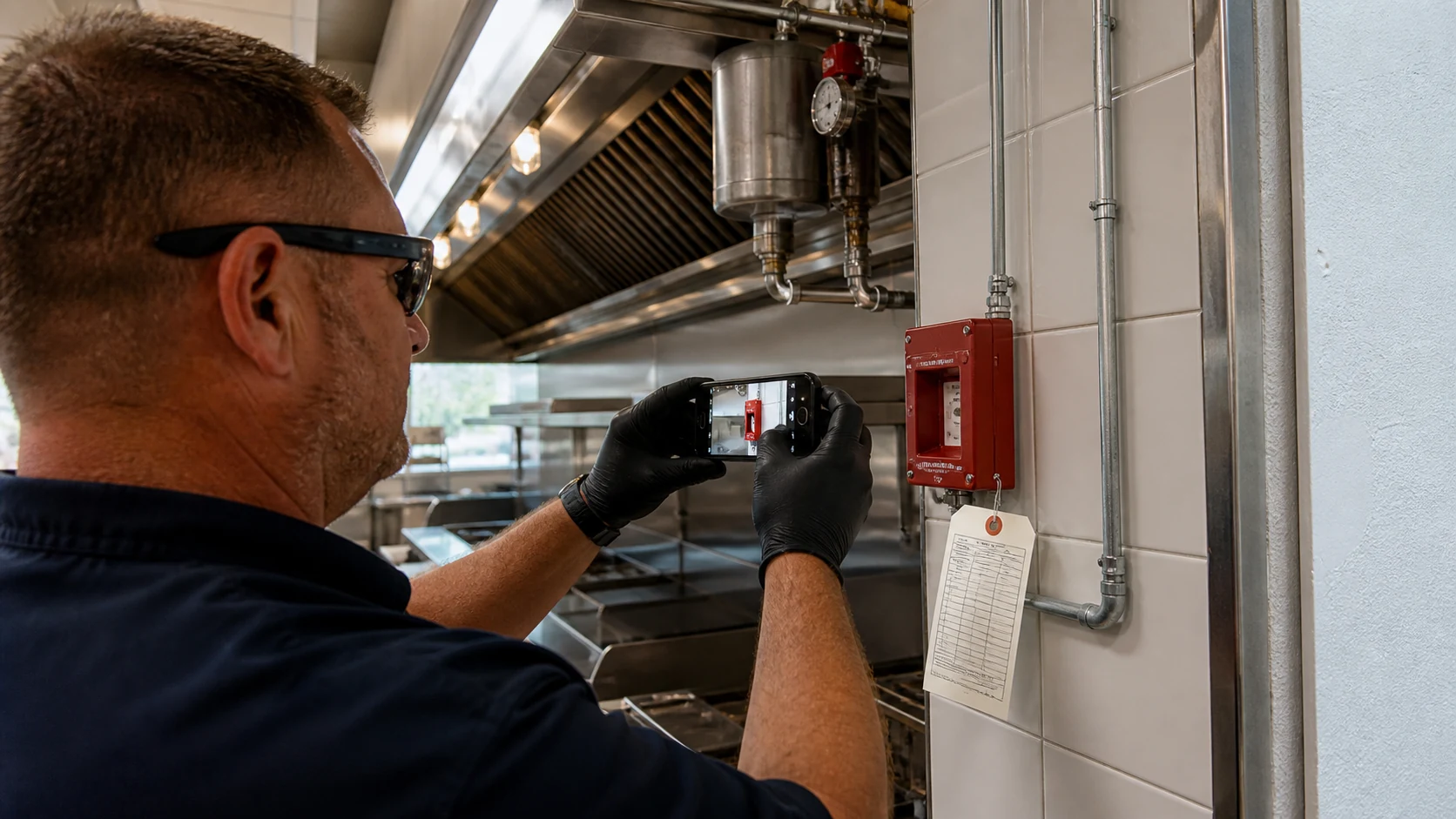
Reports and Tag Follow-Up
Inspection reports, tag information, and original deficiency findings help property contacts coordinate service records and follow-up.
View service →Managed Property Project FAQs
Kitchen Hood Fire Suppression Palm Beach coordinates Palm Beach County commercial kitchen hood fire suppression and fire protection service requests for managed properties, tenant spaces, renovations, turnovers, and contractor projects. Installation, engineering, permitting, plan review, and manufacturer-specific capabilities are confirmed rather than assumed.
Start With the Project Records and Cooking Plan
Send available inspection reports, tag information, deficiency findings, hood details, appliance information, planned cooking use, and site contacts. Kitchen Hood Fire Suppression Palm Beach can discuss the property, project documentation, and appropriate commercial kitchen hood fire suppression service path.